Exhibit · Letter
National Ombudsman to Giltay, 11 February 2000
The passage
“Finally, I would point out in general terms that in cases such as this, where the assertions of a number of those involved are diametrically opposed, it is often not possible to speak of ‘the truth’. It is not the case that the National Ombudsman regards the account of the former MID employee concerned as absolute truth, and your account thereby as untrue. This is also clear from the wording of consideration II.7, in which the word ‘plausible’ is used several times.” Page 2, the closing substantive paragraph. Translated from the Dutch; the original wording is below.
Original wording
“Ten slotte wil ik er in algemene zin nog op wijzen dat het in zaken als deze, waarin beweringen van een aantal betrokkenen haaks op elkaar staan, vaak niet mogelijk is om te spreken van ‘de waarheid’. Het is niet zo dat de Nationale ombudsman de lezing van de betrokken ex-medewerkster van de MID als absolute waarheid ziet, en uw lezing daarmee als onwaar. Dit blijkt ook duidelijk uit de formulering van overweging II.7., waarin verschillende malen het woord ‘aannemelijk’ gebruikt wordt.” The letter itself sets ‘de waarheid’ and ‘aannemelijk’ in double quotation marks; they appear here as single quotation marks because the whole passage is already quoted. The Dutch word ‘ex-medewerkster’ is feminine; the English rendering follows the essay, which reads ‘former MID employee’.

Why this document matters
In June 2017 the Ministry of Defence refused to retract the 1999 ministerial declaration of insanity, relying in part on the Ombudsman report of December 1999. This letter, written less than two months after that report appeared, shows that the Ombudsman himself did not regard his own findings as a verdict on who was telling the truth. He points out that, where the assertions of those involved are diametrically opposed, it is often not possible to speak of ‘the truth’. He therefore does not regard the former MID employee’s account as absolute truth. This, he says, is also clear from consideration II.7 of his report, which uses the word ‘plausible’ several times. That consideration, however, concerns an entirely different point: whether the MID had introduced incriminating information about Giltay into the selection procedure. It says nothing about the former employee’s characterisation of Giltay.
Provenance
- Document
- Letter
- From
- The National Ombudsman, The Hague, signed by R. Fernhout, National Ombudsman
- To
- E.F. Giltay, Scheveningen
- Date
- 11 February 2000
- Reference
- 98.07789 035
- Subject
- “Commentaar op rapport” (‘Comments on the report’)
- References
- Giltay’s letter of 18 January 2000, requesting revision of the report; the National Ombudsman report of 17 December 1999 on Giltay’s complaint about two units of the Ministry of Defence
- Handled by
- P.P.F. Schets
- Language
- Dutch
- Pages
- 2
- Held by
- Author’s archive
- See also
- Ministry of Defence to Giltay, 6 June 2017
Cited in: the essay ‘The Ban Fell, the Book Stood’ in the chapter (7) ‘Never a Substantive Answer’ and in the slide ‘National Ombudsman · 1999’ of the slideshow ‘The story on the map’.
Exhibit page: https://
Document: https://
Last modified 13 September 2026, accessed 12 November 2026.
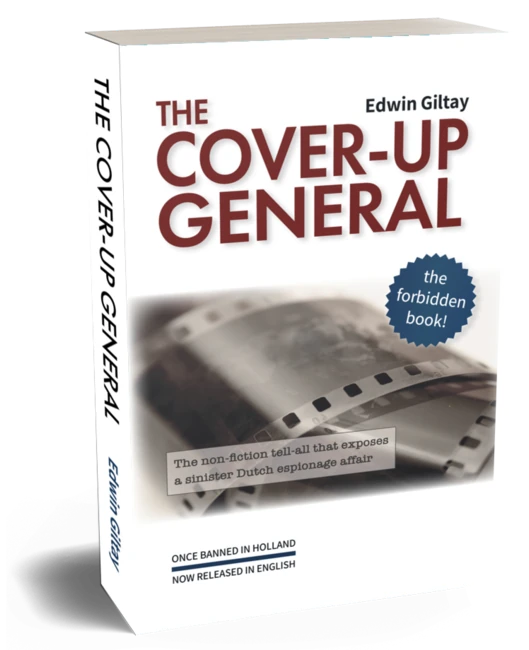
This page is an exhibit to the book The Cover-up General by Edwin Giltay and its accompanying website.