Exhibit · Article
Militaire Spectator, three Defence historians call for a new debate, 5 July 2025
The passage
“The narrow interpretation that got Dutchbat into trouble at the time was not inevitable; it was the product of a wider culture of restraint, of bureaucratic logic, and of the shifting of responsibility (or wanting to shift it), or the unwillingness to take it. Today, learning from that insight is more relevant than ever.” Second and third sentences of the closing section, ‘Intellectuele moed’ (‘Intellectual courage’). Translated from the Dutch; the original wording is below.
Original wording
“De smalle interpretatie die Dutchbat destijds in problemen bracht, was niet onvermijdelijk; ze was het product van een bredere cultuur van terughoudendheid, van bureaucratische logica en van het (willen) afschuiven, of niet willen nemen, van verantwoordelijkheid. Vandaag de dag is leren van dat inzicht relevanter dan ooit.” The parentheses around ‘willen’ are the authors’ own. The construction, literally ‘the (wanting to) shifting away of responsibility, or not wanting to take it’, has no neat English equivalent and is rendered above as two alternatives.
Why this document matters
This guest column shows that the debate over Srebrenica is not closed. That is why Giltay’s biography on this website refers to this piece. On the eve of the thirtieth commemoration, three Dutch Defence historians, Arthur ten Cate, Dion Landstra and Jaus Müller, argued that the failure stemmed not from the limits of the UN mandate, but from the narrow, minimalist reading given to it. In their view, that reading left room for passivity and restraint. They noted that the historical discussion in the Netherlands has largely fallen silent since 2002, and that thinking about Srebrenica must not stop, least of all within the armed forces. The lessons, they wrote, are more relevant today than ever.
Provenance
- Document
- Guest column on the Militaire Spectator website, retrieved from the live site
- Publication
- Militaire Spectator, volume 194, issue 7; printed version designated 2025-07-08
- Headline
- ‘Srebrenica nu 30 jaar geleden: tijd voor een nieuw debat’ (‘Srebrenica, 30 years on: time for a new debate’)
- Standfirst
- “Nieuwe feiten en omstandigheden geven aanleiding om het historische debat rondom de val van Srebrenica van nieuwe impulsen te voorzien” (‘New facts and circumstances give reason to lend fresh impetus to the historical debate surrounding the fall of Srebrenica’)
- Authors
- Prof. Arthur ten Cate, professor of military history at the University of Groningen and programme manager at the Netherlands Institute of Military History; Lieutenant Colonel Dr Dion Landstra, lecturer in military history, specialising in the development of the conceptual component of the Royal Netherlands Army; Jaus Müller MA, military historian at the Netherlands Institute of Military History and columnist for Militaire Spectator
- Date
- 5 July 2025
- Subject
- Whether Dutchbat was in fact allowed to do more at Srebrenica, which the authors say remains a historiographical gap, and the narrow reading of the UN mandate
- Note
- Written in a personal capacity. The authors announce a fuller article for the second half of 2025
- References
- NIOD, Srebrenica, een ‘veilig’ gebied (Amsterdam, 2002); UN Security Council resolutions 819 of 16 April 1993 and 836 of 4 June 1993; the report of the Srebrenica parliamentary inquiry, parliamentary paper 28 506, no. 2; minutes of the Dutch Council of Ministers of 27 October 1995, National Archives, Ministry of General Affairs, inventory number 7550, secret until 2021
- Language
- Dutch, with the passages quoted from resolution 836 in English
- Web address
- militairespectator.
nl/ artikelen/ srebrenica-nu-30-jaar-geleden-tijd-voor-een-nieuw-debat - Archived copy
- Wayback Machine, 5 August 2026
Cited in: the author biography.
Exhibit page: https://
Document: https://
Archived copy: https://
Accessed 14 November 2026.
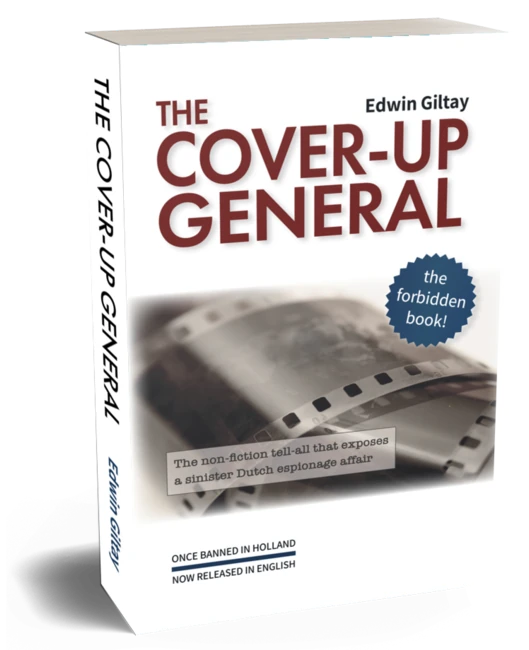
This page is an exhibit to the book The Cover-up General by Edwin Giltay and its accompanying website.