Exhibit · Judgment
Supreme Court of the Netherlands, judgment of 19 July 2019, ECLI:NL:HR:2019:1223
The essay cites this judgment for, among other things, the liability and the estimate of ten per cent. Both paragraphs are set out below. They are followed by the established facts on the fall of Srebrenica and the genocide. ‘The story on the map’ in the essay refers to those facts.
Para. 5.1 · The State is liable for ten per cent of the damage
“Dutchbat failed to offer the male refugees in the compound the choice of staying behind there, even though that was possible. As a result, Dutchbat withheld from these male refugees the chance of escaping from the Bosnian Serbs. That was wrongful. The chance that the male refugees, had they been offered this choice, would have escaped the Bosnian Serbs was small, but not negligible. That chance is estimated at 10%. This is why the liability of the State is limited to 10% of the damage suffered by the surviving relatives of these male refugees.” The summary and conclusion of the judgment. The operative part, in section 6, declares that the State acted wrongfully by denying the men this ten per cent chance, and dismisses all other claims. English text: the official translation published by the Supreme Court (ECLI:NL:HR:2019:1284).
“Dutchbat heeft nagelaten aan de mannelijke vluchtelingen die op de compound verbleven de keuze te bieden om daar achter te blijven, hoewel dat mogelijk was. Daardoor heeft Dutchbat deze mannelijke vluchtelingen de kans onthouden om uit handen van de Bosnische Serven te blijven. Dat was onrechtmatig. De kans dat de mannelijke vluchtelingen, als hun die keuze wel was geboden, uit handen van de Bosnische Serven zouden zijn gebleven, was weliswaar klein maar niet verwaarloosbaar. Die kans wordt op 10% geschat. Daarom is de aansprakelijkheid van de Staat beperkt tot 10% van de schade die de nabestaanden van deze mannelijke vluchtelingen hebben geleden.” Original wording
Para. 4.7.9 · Where the ten per cent comes from
“All in all, it must be ruled that the chance that the male refugees, had they been offered the choice of remaining in the compound, could have escaped the Bosnian Serbs, was indeed small, but not negligible. In view of all of the circumstances, the Supreme Court estimates that chance at 10%.” This paragraph gives the reasoning behind the estimate; para. 5.1 states only the outcome. English text: the official translation published by the Supreme Court (ECLI:NL:HR:2019:1284).
“Al met al moet geoordeeld worden dat de kans dat de mannelijke vluchtelingen, als hun de keuze was geboden op de compound achter te blijven, uit handen van de Bosnische Serven zouden zijn gebleven, weliswaar klein was maar niet verwaarloosbaar. De Hoge Raad schat die kans in het licht van alle omstandigheden op 10%.” Original wording
Para. 2.1.2 · The fall of Srebrenica and the genocide
“On 11 July 1995 around 4:30 p.m., the city of Srebrenica fell and was occupied by Bosnian Serbs.”
“After the fall of Srebrenica, genocide was committed against Bosnian Muslims.”
The established facts, which can be assumed in cassation: fact (39) and the first sentence of fact (59). English text: the official translation published by the Supreme Court (ECLI:NL:HR:2019:1284).
“Op 11 juli 1995, rond 16:30 uur, is de stad Srebrenica gevallen en ingenomen door de Bosnische Serven.”
“Na de val van Srebrenica heeft genocide van Bosnische moslims plaatsgehad.”
Original wording
Why this document matters
This is the final ruling in the Mothers of Srebrenica case. The Supreme Court held that Dutchbat acted wrongfully by failing, on 13 July 1995, to offer the roughly 350 male refugees the choice of staying behind in the compound. It estimated the chance that they would have escaped the Bosnian Serbs at ten per cent. The liability of the State was limited accordingly, to ten per cent of the damage suffered by the surviving relatives. That was a fraction of what the Mothers of Srebrenica had claimed. Two years earlier the Court of Appeal of The Hague had put that share at thirty per cent, and this judgment set that ruling aside.
Provenance
- Document
- Judgment in cassation (arrest)
- Court
- Supreme Court of the Netherlands, Civil Division
- Date
- 19 July 2019, delivered in open court
- Case number
- 17/04567
- Case-law identifier
- ECLI:NL:HR:2019:1223
- Official English translation
- ECLI:NL:HR:2019:1284
- Parties
- The State of the Netherlands (Ministry of General Affairs, Ministry of Defence and Ministry of Foreign Affairs), The Hague, versus ten respondents from Bosnia and Herzegovina and the Mothers of Srebrenica Foundation, Amsterdam
- Counsel
- K. Teuben for the State; J. de Bie Leuveling Tjeenk and M.J. Schenck for the Foundation and the respondents
- Bench
- C.A. Streefkerk (Vice-President, presiding), M.V. Polak, C.E. du Perron, M.J. Kroeze and C.H. Sieburgh
- Opinion
- Advocate General P. Vlas, ECLI:NL:PHR:2019:95
- Subject
- Liability of the State for the acts and omissions of Dutchbat around the fall of Srebrenica in July 1995; attribution to the State and effective control, the Genocide Convention, Articles 2 and 3 ECHR, and the chance denied to the men on the compound
- Judgment appealed
- Court of Appeal of The Hague, 27 June 2017, ECLI:NL:GHDHA:2017:1761, case numbers 200.158.313/01 and 200.160.317/01, set aside
- First instance
- District Court of The Hague, 16 July 2014, case C/09/295247 / HA ZA 07-2973
- References
- Para. 5.1; the estimate in para. 4.7.9; the established facts in para. 2.1.2; operative part in section 6
- Language
- Dutch
- Published in
- Rechtspraak.nl; RAV 2019/81
- Held by
- Council for the Judiciary (Raad voor de rechtspraak), deeplink.
rechtspraak. nl/ uitspraak? id= ECLI: NL: HR: 2019: 1223 - See also
- Court of Appeal of The Hague, judgment of 27 June 2017, ECLI:NL:GHDHA:2017:1761
Cited in:
- the essay ‘The Ban Fell, the Book Stood’ in the chapters (5) ‘More Than a Banned Book’, (7) ‘Never a Substantive Answer’ and (12) ‘No Other Option Left’ and in the slides ‘Srebrenica · 1995’ and ‘Supreme Court · 2019’ of the slideshow ‘The story on the map’
- the author biography.
Document: https://
Accessed 19 November 2026.
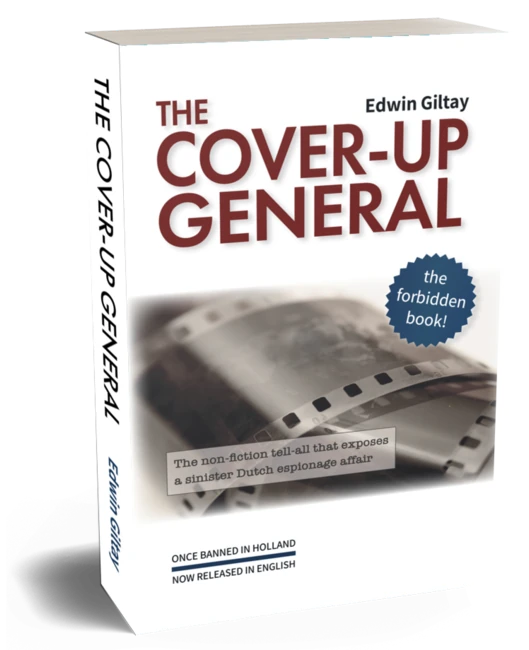
This page is an exhibit to the book The Cover-up General by Edwin Giltay and its accompanying website.