Exhibit · Article
Burco Online News, Banned Books, 22 March 2018
The passage
“How to deal with books in which forbidden matters are found, forbidden by custom, religion or law. All copies of the book must be collected and burned or destroyed. If the copies are held on a computer, in a system or on tape, they must be erased. And the reprinting of those faulty books must be prohibited. Once they have been corrected, with whatever was wrong thrown out, they must be reprinted.” Opening paragraph of the article, under the standfirst ‘How To Deal With Censored Books, As Having Harmful Content’. Translated from the Somali; the original wording is below.
Original wording
“Si loo xalliyo buugta, laga helo waxyaabo reeban; ku reeban dhaqan, diin amma sharci. Waa in la soo ururiyaa dhammaan nuqulada buugaa, lana gubaa amma la baa-biiyaa. Haddii ay yihiin nuqulo kumbuyuuter , system amma cajalad ku jirana waan in la-masaxo. Lana mamnuuco in dib loo daabaco buugtaa qaldan. Iyaga oo saxan, lagana tuuray wixii qaldanaa waa in dib loo daabacaa.” Quoted from the article as archived by the Internet Archive on 26 March 2018. The spelling, spacing and hyphenation are the paper’s own, including ‘kumbuyuuter ,’ with a space before the comma, and the hyphenated forms ‘baa-biiyaa’ and ‘la-masaxo’.
Why this document matters
More than two years after the Dutch ban, and almost two years after it was lifted, the book was still being listed far beyond Europe as banned. Burco Online News, a local Somaliland newspaper, first sets out what should happen to books found to contain forbidden content: every copy must be collected and burned or destroyed, and digital copies must be erased. A list of banned books from around the world then follows. The Cover-up General appears on that list alongside Salman Rushdie’s The Satanic Verses and the Bible, and is recorded as banned in the Netherlands in 2015.
Provenance
- Document
- Article, ‘BANNED BOOKS’, article 71526 on burcoonline.com
- Publication
- Burco Online News, described in the caption to its quotation in the Voices section as a local Somaliland newspaper
- Section
- Maqaallo, the site’s section for articles
- Headline
- ‘BANNED BOOKS’
- Standfirst
- ‘How To Deal With Censored Books, As Having Harmful Content’
- Author
- Bylined “Shaqaalaha Burcoonline News”, ‘the Burco Online News staff’, and signed at the foot by Mohamed Omer Abdilahi, administration and finance consultant, Hargeisa
- Date
- Thursday 22 March 2018, 17:12
- Subject
- What should be done with books held to contain forbidden content, followed by a list of banned books from around the world
- Entry
- “The Cover-up General ---Edwin Giltay2014---Non-fiction---Banned in the Netherlands in 2015”, the sixteenth of seventeen titles
- References
- Salman Rushdie’s The Satanic Verses, the Bible, E.L. James’s Fifty Shades Trilogy and thirteen further titles, and the Ministries of Information, Justice and Religion as the authorities that ban books
- Language
- Somali, with the list of book titles in English
- Publisher
- Burco Online News, burcoonline.com
- Held by
- Internet Archive Wayback Machine, snapshot of 26 March 2018
- Archived copy
- web.archive.org/
web/ 20180326083332/ http:// burcoonline.com/ articles/ 71526/ BANNED-BOOKS
Cited in: the Voices section under the heading ‘Forbidden Fruit’.
Exhibit page: https://
Document: https://
Accessed 15 November 2026.
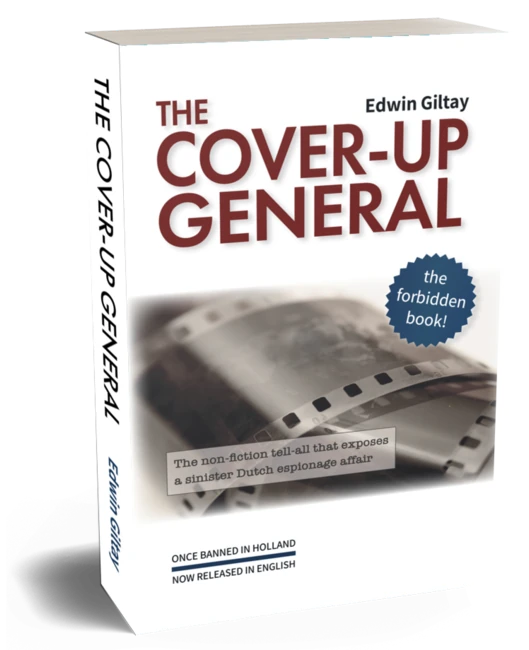
This page is an exhibit to the book The Cover-up General by Edwin Giltay and its accompanying website.